

What should you expect during a roof Replacement?

A Homeowner’s Guide from Mackenzie Roofing
Replacing your roof is a major home project, and for many homeowners it’s something they’ve never experienced before. One of the first questions people ask is how much the project will cost, which we explain in detail in our guide on roof replacement cost in Boise:
After installing roofs across the Treasure Valley over the last 15 years—including Boise, Sun Valley, and McCall—I’ve learned that homeowners feel much more comfortable when they understand exactly what the process looks like from start to finish.
Below is a realistic look at what to expect during a professional roof replacement based on how we run projects at Mackenzie Roofing.

1. Scheduling Your Roof Replacement
Once a homeowner signs a contract, the first step is scheduling the installation.
In the Treasure Valley, the schedule is typically one to two weeks out, although during peak roofing season it can sometimes extend closer to a month. Timing is always somewhat dependent on the weather, since roofing is obviously an outdoor job and we want conditions to be safe and dry before starting.
Once the date is set, materials are ordered and the crew prepares so everything runs efficiently once installation day arrives.
2. Protecting Your Property Before Work Begins
One of the most important steps in a roof replacement happens before the first shingle is removed.
Roofing is naturally a messy job, but a professional crew will take significant precautions to protect your home and landscaping.
Typical protection measures include:
Tarping the entire perimeter of the home to catch debris
Placing plywood over vulnerable windows
Building temporary protective boxes over sensitive landscaping
Installing protective netting over air conditioning units
Covering pools or hot tubs with OSB or protective boards
Some homes require additional protection. For example, houses in Boise’s North End or on the Bench often have limited driveway access or detached garages, which makes debris management more complicated.
In these cases we may use specialized systems like debris-catching nets installed along the roof edges to safely direct material away from the home.
The goal is simple: protect the property while keeping the crew working efficiently.
3. Removing the Old Roof (The Tear-Off)

Once everything is protected, the tear-off begins.
If the home has a driveway close to the house, we typically place a dump trailer nearby so old shingles and roofing materials can be thrown directly into it. This keeps the job site cleaner and speeds up the process.
Some homes don’t have that luxury. Older Boise neighborhoods often require materials to be ground dropped, meaning debris is brought down to the yard and cleaned up later.
With a well-sized crew of four to eight roofers, an average 2,500-square-foot roof can be torn off surprisingly quickly.
During this phase the crew will:
Remove all shingles and roofing materials
Pull or hammer down exposed nails
Inspect the roof decking underneath
Begin cleaning the ground as they go
A good roofing crew is constantly cleaning during the process so the final cleanup goes much faster.
4. What Happens if Problems Are Found?
Once the shingles are removed, the structure of the roof becomes visible. This is where hidden issues sometimes appear—some of which may require a full replacement, while others can sometimes be addressed with targeted roof repair depending on the condition of the roofing system.
Some of the most common things we find during tear-off include:
Rotten roof decking
Improper flashing from previous installations
Multiple layers of shingles
Roof design issues like dead valleys where water collects
In many cases these issues are the result of previous leaks or severe weather, which is why homeowners sometimes need professional storm damage roofing services after major wind or hail events.
A good inspection will usually reveal many of these issues ahead of time, but occasionally surprises happen. If you’re curious about how contractors identify these problems before installation begins, here’s a guide explaining what happens during a roof inspection:
For example, we once replaced a roof on a home with vaulted ceilings and no attic access. Because there was no attic, we couldn’t fully inspect the decking beforehand. Once the tear-off began, we realized the entire roof needed a full re-deck.
Fortunately, the homeowner had already been prepared for that possibility. We simply adjusted the plan:
Day one: tear-off and replacement of the roof decking
Day two: shingle installation
By drying in the roof with underlayment overnight, the house stayed completely watertight.
This is why good roofing contracts include clear pricing for things like decking replacement or additional shingle layers before the job begins.
5. Installing the Roofing System

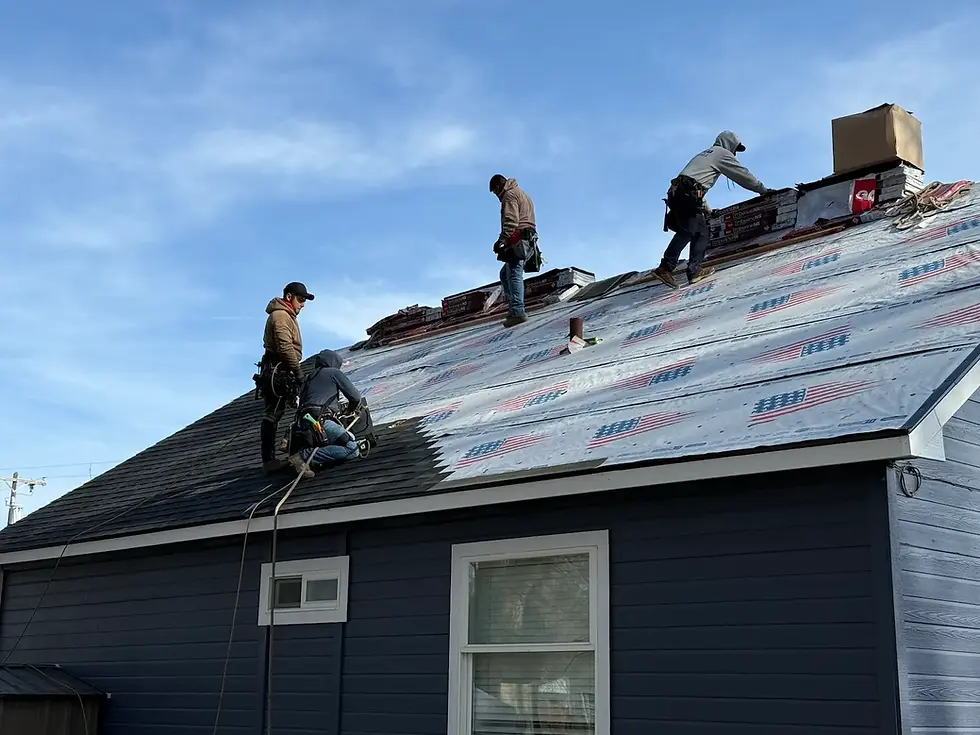
Once the roof deck is ready, the roof replacement system can be installed.
A proper roof isn’t just shingles—it’s a system of layers that work together to keep water out and protect the home.
Ice and Water Shield
Even though it isn’t required everywhere in Boise, I strongly believe it’s a critical part of a long-lasting roof. In higher snow areas like Sun Valley and McCall it’s required by code, but even in the Treasure Valley it provides valuable protection against leaks in vulnerable areas.
Synthetic Underlayment
Modern synthetic underlayments are far superior to the old tar-dipped organic paper still used by some contractors trying to cut costs. They are stronger, more water resistant, and far more reliable.
Flashing
Flashing around walls, chimneys, and roof transitions should almost always be replaced with a new roof. Reusing flashing is a shortcut that often leads to leaks later.
Ventilation
Ventilation may be the most overlooked factor in roofing in the Treasure Valley. Our hot summers can bake shingles from underneath if the attic isn’t properly vented. Proper net-free ventilation area helps extend the life of shingles and improves the home’s energy efficiency.
Proper Shingle Installation
Shingles must be installed according to manufacturer specifications, including nail patterns and stagger patterns. Ignoring those guidelines can void warranties and may even lead to insurance claims being denied in the future.
A professional crew can install roughly 30 squares per day without sacrificing quality.
6. Material Delivery and Weight Distribution
Material delivery is carefully scheduled so it doesn’t slow down the installation process.
For most homes, we try to have shingles delivered late in the morning after the underlayment is already installed. That way the materials can be staged safely on top of the roof.
Suppliers like ABC Supply follow strict guidelines for distributing shingle weight across the roof structure to avoid structural stress.
Another important detail many homeowners don’t realize: shingle bundles should never be dropped from height, because the impact can sometimes crack drywall inside the home.
7. Cleanup and Final Inspection

Cleanup is a critical part of the roofing process.
Throughout the installation, the crew removes debris and keeps the job site as organized as possible. Once the roof is complete, the property is thoroughly cleaned and inspected.
This includes:
Removing leftover debris
Cleaning around landscaping and exterior areas
Performing a full magnetic nail sweep of the property
Carefully checking walkways, driveways, and entrances
As the owner, I personally perform the final inspection and nail sweep to make sure everything is safe for homeowners, pets, and vehicles.
It’s difficult to catch every single nail, but with a careful process you can leave the property clean and safe. Our roof replacements include at least 3 thorough nail sweeps, we will perform even more if there is something like a gravel driveway or walkway.
8. Common Concerns Homeowners Have
Most homeowners share similar concerns before their roof replacement begins.
The most common ones include:
Noise- Roofing is loud. There will be hammering and movement overhead throughout the day.
Mess- Roof replacements create debris during the process, but an organized crew manages it carefully.
Whether you can stay home- You absolutely can stay home if you’re comfortable with the noise.
For homeowners who work from home or have special situations, we can sometimes split a one-day roof into two days, which gives people some peace and quiet in the late afternoon.
We also establish a “safe door”—an entry point where the crew focuses on keeping debris and nails away so homeowners can safely enter and exit.
9. Choosing the Right Roofing Contractor
One of the best things homeowners can do is ask practical questions before hiring a roofer.
Good questions include:
What can you tell me about these specific shingles that make them the right choice for my home?
Why did you choose this underlayment?
Will you replace all flashing around walls and chimneys?
If decking needs replacement, will you provide photos or video proof?
What is the cost per sheet of osb or plywood for decking replacement?
How long will the job take?
What does your cleanup process look like?
What do the warranties actually cover?
A professional roofer should have strong opinions about the materials they install and be able to explain why.
One of the biggest mistakes homeowners make is choosing the lowest bid without comparing the roofing system being installed.
Cheap bids often include shortcuts like:
Installing shingles over existing shingles
Builder-grade shingles
Old tar paper underlayment
Reusing flashing
No ventilation improvements
Those shortcuts create what I call a “cheap now, expensive later” roof replacement. Roofing really is a “buy it nice or buy it twice” home improvement project.
That doesn’t mean a lower bid is always bad—but homeowners should be able to compare materials and installation practices clearly before deciding. With some light research a homeowner should be able to tell if the low bid is due to inferior labor and materials, or if the high bids are just due to inflated overhead and lets be honest here, greed... With the ever growing population, several roofing contractors in the Treasure Valley and Idaho have been purchased by private equity investors, and they often have significantly higher prices when installing comparable materials.
Roof Replacement FAQ
How long does a roof replacement usually take?
Most residential asphalt shingle roofs in the Treasure Valley can be replaced in one to two days depending on roof size, weather conditions, and whether roof decking needs replacement.
Will my yard be a mess during the project?
Professional roofing crews take steps to protect landscaping and clean debris throughout the project. Most contractors also perform a magnetic nail sweep after the job is complete.
Do I need to leave my house during a roof replacement?
No. Most homeowners stay in their homes during the project, although the work can be noisy during the day.
What happens if damage is discovered during tear-off?
If hidden problems like rotted decking are discovered, the contractor should document the issue and discuss repair options before continuing.
Final Thoughts
A roof replacement is a big investment in your home, but when it’s done correctly it should provide decades of protection.
The key factors that make the process go smoothly are:
Clear communication
Careful preparation
Quality materials
Experienced crews
Thorough cleanup
Meaningful warranties from the manufacturer and a labor and craftsmanship warranty from the company you choose!
When homeowners understand what’s happening on their roof and why, the entire project becomes far less stressful—and the result is a roof you can rely on for years to come. If you’re also wondering how much a roof replacement costs, we’ve broken down typical pricing and what influences it in our Boise roofing cost guide:
If you're planning a new roof and want to understand the process, materials, and pricing, you can learn more about our roof replacement services in the Treasure Valley, Sun Valley, and McCall here:

Comments